"A style does not go out of style as long as it adapts itself to its period. When there is an incompatibility between the style and a certain state of mind, it is never the style that triumphs.” Coco Chanel
History of Fashion
Fashion has been around for many centuries and continues to evolve with each passing decade. Primarily, when talking about fashion, most people automatically think of runways and models, which include an exclusive group of people with a more evolved style. So when did fashion become such an influential part of society in the way people perceive one another? Surprising to many, the start of fashion began towards the end of the 13th century.
Around the year of 1391, "model dolls" had surfaced into production and could be considered the first version of what people now know as mannequinns, which are used to show clothes on an interpretation of the human body. As centuries passed, live models were beginning to replace "model dolls" as a way to more clearly demonstrate how certain articles of clothing should be worn. Thus, by the late 1800s, books including fashion models, as well as so-called "fashion parades" began to surface, primarily within the French communities. By the start of the 19th century, more "fashion parades", which soon became known as fashion shows, started to be hosted within the United States.
New York was the first state in the U.S. to finally embrace the world of fashion and, by the 1920s, department store fashion shows became more common. It wasn't until the 1940s, however, that fashion was finally introduced to the press as a means of showing off American designs; Eleanor Lambert is credited as the official organizer of this "Press Week" in New York. After being exposed to the press, fashion shows were slowly being recognized as more exclusive events; and all department stores in New York City were required to get a permit before hosting one. Throughout the 1950s, "Press Week" continued to be the outlet for many American designers to promote their lines and eventually fashion could be found within magazines.
As time moved on, the fashion industry began growing immensely and the decades of the 1960s through the 1980s brought in audiences of roughly one million people, as well as propelled designers to become more independent in hosting their shows. It wasn't until 1994 that fashion shows became more organized, providing a specific schedule, the press, and even sponsorships. Due to modernized technology, fashion even leaked into the World Wide Web in the 20th century. Thus, the shows were now being filmed, as a means of showing the public the most current styles of the time. By 2009, the expansion of the fashion industry was evident when the cost of a show in Bryant Park was estimated at one million dollars. The price will only continue to grow, in that the fashion world is continuously changing. Fashion will continue to play an important part in society as a means of determining gender norms, in terms of the clothes we select and what is considered "ideal" as to how clothes should be worn and by what body types.
For a complete timeline of the history of fashion visit: http://fashionversusart.blogspot.com/2009/11/history-of-runway.html
Who Does Fashion Affect and Why Does It Matter?
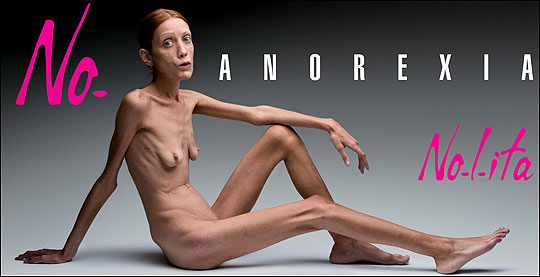
Fashion is seen by everyone through the media in our society. Since everyone is exposed to it, it affects everyone. We are expected to look like the models we see wearing the latest fashion. They are there as a comparison for us, even from an early age. Very young children are able to recognize fashion, and this is detrimental as they grow up. Children are exposed to these unrealistic body images of the models and they create a warped body image. If we begin noticing these fashion trends from such a young age, it will most likely affect our lives from then on. Fashion affects men and women alike. Even toys and dolls are a source of an unrealistic body image for little girls. Dolls such as Barbie portray the desired female body as being thin, large-chested, and tan. Women, like the children, see these tall, thin runway models and Barbie dolls and feels as though they are held to that standard. They begin to think that because they don’t look like these models there is something wrong with them.
Due to the fact that fashion affects everyone, it is very important to understand any negative effects that it may cause. In the beginning, fashion was an outlet for individuals to express their personality and style in the way that they dress. Now, people base a lot on fashion, such as the best dressed and the best style. Fashion creates these warped body images and they begin at an early age. It is important to not allow children to think that this is what is realistic. But, in the end, fashion symbolizes who we are. We use fashion to express ourselves, show our individualism, display our social status, and many more.
According to the American Academy of Pediatrics (2001), "Children are influenced by media- they learn by observing, imitating, and making behaviors their own" (p. 1224).
Researchers have suggested that media, such as fashion, influence the development of self-esteem in adolescents through messages about body image. Television, movies, magazines, and advertisements display fashion in different ways, but they all present unrealistic expectations of beauty, weight, and appearance. These researchers have stated that these unrealistic expectations can be a cause for eating disorders and low self-esteem.